What Are The Common Signs of Water Leaks In Your Home?
Most homeowners don't find a leak because they wake up to a flooded kitchen; they find it because something just feels off. Maybe your water bill jumped $40 for no reason, or there’s a musty smell in the hallway that won’t go away no matter how much you clean.
A pinhole leak might stay hidden behind your drywall for months, quietly rotting studs and inviting mould before you ever see a drop on the floor. We put this article together to show you the warning signs most people miss, a quick 15 minute test you can do with your water meter, and how to know when a DIY fix isn't going to cut it.
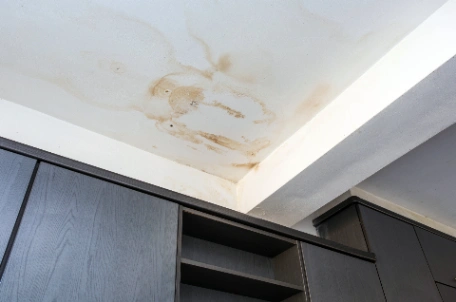
What You’ll SEE if You Have a Water Leak
In a perfect world, a leak would just be a puddle on the floor where you can see it. But usually, it’s a lot sneakier than that. By the time you actually notice one of these visual signs, the water has probably been sitting back there for longer than you'd like to think.
If you’re noticing any of these signs, it usually means the water has been working its way through your home for a few weeks already:
👀 The "Shadow" on the Ceiling
Most leaks aren't a steady drip right away; they usually show up as a faint ring that looks like a tea stain or a brownish bruise on the drywall. If you reach up and the spot feels soft, or if you notice the tape on the ceiling joints is starting to peel away, you’ve almost certainly got an active leak somewhere on the floor above.
👀 Bubbling or "Crunchy" Paint
When water gets trapped behind a coat of latex paint, it stretches out into a bubble. If you poke it and it feels like a water balloon, or if the paint is flaking off in a 'crunchy' texture, water is definitely traveling down the backside of your wall.
👀 Warping in Weird Places
Look at your baseboards and the kickplates under your kitchen cabinets. If the wood looks like it's "frowning" (cupping) or pulling away from the wall, there’s moisture underneath.
👀 The Constant Wet Spot in the Yard
If it hasn't rained in three days but you have one patch of grass that is lush, bright green, and slightly squishy, your main water line might be weeping underground.
Quick Pro Tip:
Check the back of your vanity cabinets with a flashlight. Look for "bloated" particle board or white mineral deposits (efflorescence) around the pipe connections. If the wood looks swollen, your sink is likely leaking every time you wash your hands.
What You’ll SMELL if You Have a Water Leak
👃 That "Wet Dog" or "Old Basement" Smell
If you open a cabinet under the sink and get hit with a damp, earthy odour (sort of like a pile of wet laundry that sat in the washer too long) it’s usually not just "old house smell."
A clean cabinet should be odourless. If you find yourself constantly lighting candles or using air fresheners in one specific room, the water is likely hiding in the subfloor or the drywall behind your cabinets. By the time you can smell it, the mold has already started to move in.
What You’ll HEAR if You Have a Water Leak
Most leaks don’t sound like a 'splash.' They’re usually just a faint, rhythmic noise that you eventually stop noticing because it blends into the background of the house. But if you start hearing something new, even if it's just a soft hum or a tick, don't just ignore it! That's usually the sound of a small problem trying to get your attention. 🚨
👂 The "Ghost Flush" in the Middle of the Night
You’re sitting in the living room and suddenly hear the toilet in the guest bath start running for five seconds, then stop. No one is in there. We call this a 'ghost flush.'
It sounds spooky, but it’s usually just a worn-out flapper. Water is slowly leaking from the tank into the bowl, and the tank is just 'topping itself off' so it doesn't run dry. It’s a small leak, but it can waste hundreds of litres a month.
👂 Ticking or Tapping Behind the Walls
This is the one that drives homeowners crazy. If you hear a steady tick-tick-tick behind a wall, it’s rarely a clock. Usually, it’s one of two things: a pipe expanding against the timber frame as hot water runs through it, or a slow drip hitting the bottom of a PVC drain pipe.
If that ticking happens even when no water is running, you need to have someone look at it before that "tap" turns into a "flood."
👂 A Constant Hissing Sound
If you hear a faint, constant hissing, almost like air escaping a bike tyre, and it’s coming from behind a wall, don't ignore it. That’s usually a high pressure pinhole leak.
Because the water is under pressure, it isn't just a slow drip; it’s a fine mist spraying everything inside your wall cavity. These are the ones that catch people out because they can rot out your timber studs and soak your insulation long before you ever see a damp spot on the plaster
👂 The "Whine" When a Tap is Off
Sometimes you’ll hear a high-pitched whistling or a weird 'whine' even when all the taps are bone-dry. Usually, that’s a sign that a valve isn't seating properly or there’s a break somewhere else causing a vibration.
The tricky part is that sound travels; it might be screaming at the kitchen sink, but the actual break could be in a pipe right at the back of the crawlspace. If your pipes are 'singing' to you, something is definitely leaking under pressure.
How to Check Whether You Have a Water Leak
The Water Meter Test
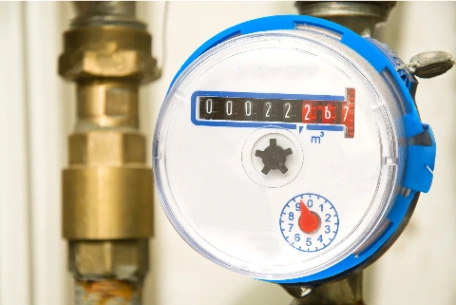
If you suspect a leak but can’t find a puddle or a stain, your water meter is the ultimate truth-teller. It basically tracks every drop entering your home. Here is how to run a quick 15 minute audit:
1️⃣ Freeze Your Water Usage
Make sure everything is off. No showers, no dishwasher, and definitely no garden sprinklers. Tell the family not to flush a toilet for the next 15 minutes.
2️⃣ Find the "Little Triangle" or "Wheel"
Head out to the front boundary and find your meter box. Pop the lid (carefully, as there’s usually a spider or two in the corners!) and look at the face of the meter. You’re looking for a little triangle or wheel. That’s your leak indicator. If that thing is spinning even a tiny bit while the house is 'frozen,' you’ve got water moving through the pipes
3️⃣ The 15 Minute Watch
If that little triangle is spinning while everything in the house is off, you’ve caught the leak red-handed! But if it looks still, don't trust it yet. Write down the last two red numbers (those are your litres) and go grab a cuppa. Check it again in 15 minutes. If those numbers have moved even by one, you’ve got a 'silent' leak that’s slowly ticking over your water bill.
4️⃣ The "Isolation" Trick
If the meter is spinning, go and turn off the main isolation valve for the house (usually located near the meter or where the pipe enters the side of the building). Head back to the meter and have another look. If it's still ticking over, the leak is underground in your yard. If it’s stopped dead, then the leak is definitely somewhere inside the house. This one trick narrows the search down by half in about thirty seconds.
The Food Colouring Test
If you suspect your toilet is "ghost flushing" but you can’t see any ripples in the bowl, don’t start pulling the cistern apart just yet. Grab a bottle of blue or green food colouring from the pantry and drop about 10 drops into the cistern (the tank behind the seat).
Now, walk away for 20 minutes. Don’t flush!
When you come back, look at the water in the toilet bowl. If that water has turned blue or green, you’ve got a leak. It means the flapper valve at the bottom of the cistern isn't sealing properly, allowing water to bleed into the bowl constantly. It’s a $10 part and a 5 minute fix, but left alone, it can waste thousands of litres a year.
Leak Location Map
If the meter test confirms there’s a leak but your floors are dry and the ceilings look fine, it’s time to look at the 'hidden' map of your plumbing. In most Aussie homes, your pipes are tucked away in places you'd never think to look until something goes wrong.
Depending on when your place was built, the culprit is usually hiding in one of these spots:
⚠️ The Wall Cavity: Most of your internal plumbing runs through the timber or steel frame behind your plasterboard. If you hear hissing or see a "tea stain" on the wall, the leak is here.
⚠️ The Slab (Concrete Floor): If your home is built on a concrete base, your main water lines are often buried right in the slab. This is where those "warm spots" on the tiles come from.
⚠️ Under the House: If you’re on stumps or a high-set, your pipes are likely clipped to the floor joists. Grab a torch and head underneath—if you see mud or dripping timber, you’ve found your culprit.
⚠️ The Yard (The Mains): If the meter is spinning but the house is bone-dry, the leak is in the line between your water meter and your front door. Look for that patch of "super-green" grass on the nature strip or a damp spot in the garden beds.
Why it Matters to KNOW Whether You Have a Leak
A tiny leak might not seem like an emergency, but in our trade, we say that water always wins. It’s not just about the extra $50 on your water bill; it’s about what that moisture is doing to the bones of your house while you’re asleep. Here is why "waiting until it gets worse" is the most expensive mistake you can make.
🐜 Structural Damage - Rot & Termites
Most Australian homes rely on a timber frame. When those frames get damp, they don't just swell; they start to rot. But there’s a bigger threat: Termites.
Termites don't just want wood; they want wet wood. A slow leak behind a shower wall or under a vanity is basically an open invitation for a colony to move in. A $200 plumbing fix is a bargain compared to a $20,000 structural repair and termite treatment.
🦠 Health Risks - Trapped Hidden Mould
Once moisture gets trapped inside your wall cavity or under your carpets, mould can start growing in as little as 24 to 48 hours. By the time you actually smell that "musty" odour or see black spots on the plasterboard, the spores are already in your air conditioning and your family’s lungs.
If you’ve got kids with allergies or asthma, a hidden leak is a health hazard you can’t afford to ignore.
💸 Financial Impact - More than Just Water!
If your leak is on the hot water line, you're getting hit twice. You’re paying for the kilolitres of water you’re losing, but you’re also paying for the electricity or gas it takes to heat that water before it leaks into the dirt. We’ve seen "silent" leaks add hundreds of dollars to a single quarterly power bill. Finding the leak today means you stop paying for water and energy you never even got to use.
How Professional Plumbers Look for Hidden Leaks
If you’ve run the meter test and you know water is disappearing, but you still can't find a damp spot to save your life, don't go grabbing the sledgehammer! 😱 There’s no need to tear down your walls to find a hidden leak!
Modern plumbing isn't about guesswork or "poke and hope." When we come out to a hidden leak, we bring the "big guns" to find the pipe without damaging your home:
Acoustic Leak Detection
Think of this like a high-powered doctor’s stethoscope. We use ground microphones to listen for the specific frequency of water escaping a pipe under pressure. Even if it's buried under a metre of dirt or concrete, we can usually hear it "screaming."
Thermal Imaging
This is our X-ray vision! We use infrared cameras to see the temperature differences behind your walls or under your floors. A burst hot water pipe will light up like a neon sign on our screen, showing us exactly where the moisture is spreading.
The Bottom Line: Don’t Let a Drip Become a Disaster
At the end of the day, a leak is just a bill you haven't paid yet. Whether it's a 'ceiling shadow' or a 'ghost flush,' these signs are your home's way of telling you something is wrong before it turns into a disaster.
If you’ve spotted any of these red flags—or if you ran the meter test and that little triangle is spinning—give us a call on 02 8188 5396 or complete our enquiry form.
We’ll help you find the source and fix it properly the first time!